Begin with the full frontage
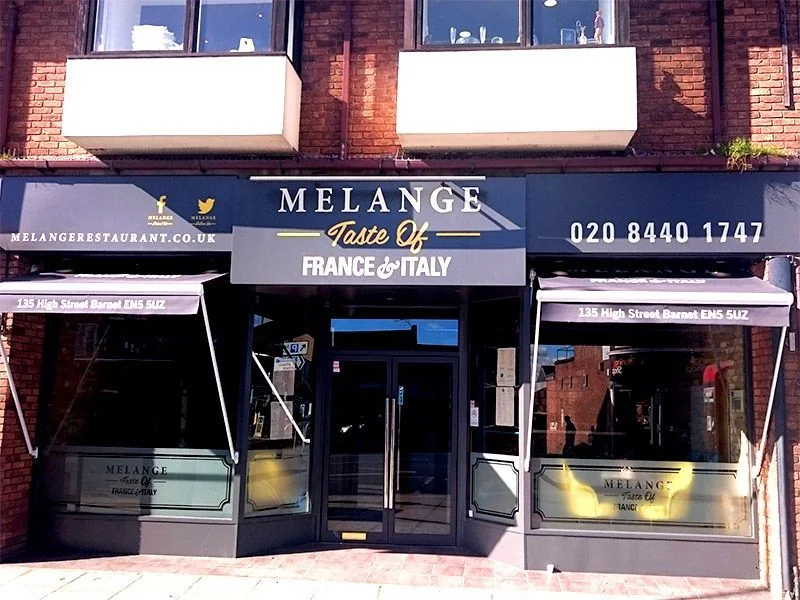
A cropped logo mockup rarely shows the conditions that matter most. Include the door, windows, awning, neighboring units, and the available sign band in your first photographs. Whether the project is on a traditional town square or a separate commercial property, the building’s proportions should inform the proposal from the start.
Find the primary viewing direction
Someone approaching along a sidewalk sees a frontage differently from someone arriving across a parking area. Decide which view needs the strongest identity and whether a second sign has a separate purpose. A facade name, projecting face, and window message can complement each other when each is planned for a defined audience.
Use the permanent identity sparingly
The main business name should remain recognizable as products and promotions change. Keep a stable identity on the fabricated sign and give changing information a planned home. A window graphic or temporary banner may be appropriate for a short campaign, but it should not make the permanent name difficult to locate.
Bring the property information early
If a landlord or property manager provides sign criteria, include them with the initial request. Existing mounting points, materials, and the condition of an awning or wall can also affect the scope. Approval responsibilities and final installation details should be discussed for the actual property instead of inferred from a neighboring business’s sign.
Coordinate the last few feet
The identity has done only part of its job if customers still hesitate at the door. Review entrance lettering, hours, and any shared directory as a group. For a Kentucky location in a community with a same-named city elsewhere, use the complete address in project paperwork. That keeps site planning precise while the finished sign remains visually focused.