
Use the name patients expect
Start with the practice name used in appointment messages and public-facing materials. A patient should encounter that same recognizable identity on the property directory, entrance, and reception wall. When a practice includes several clinicians, decide whether individual names belong in the permanent sign or on a display that can be updated.
Solve the outside problem first
A practice in its own building may need a facade identity or entrance monument. A practice in a shared office property may instead need a tenant panel and clear suite lettering. These are different projects. Photograph the route a new patient takes and identify the point at which they need to recognize the office. Choose the format around that problem.
Let reception complete the introduction
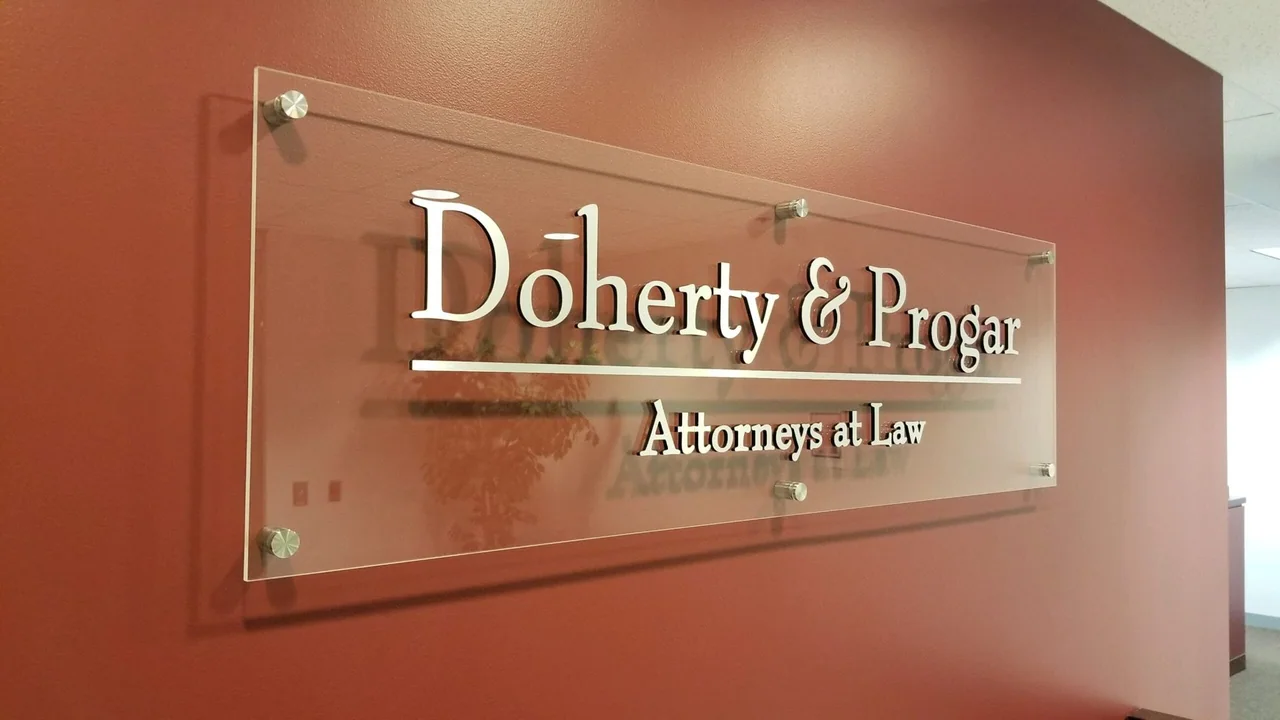
A lobby logo can confirm arrival and connect the physical space with the practice’s visual identity. View the actual wall before choosing a finish. Lighting, wall color, reception furniture, and available space affect how the sign reads. A dimensional logo need not repeat every piece of exterior information; its job can simply be a confident introduction to the practice.
Keep operational messages adaptable
Hours, appointment instructions, and clinician listings can change more often than the brand. Giving them a defined place makes future updates easier and protects the clarity of the primary name. Where several suites or entrances are involved, agree on destination names before producing door or directory graphics.
Prepare a useful brief
Send the approved practice name, logo artwork, suite details, property criteria, and photographs of the exterior and reception wall. Include any existing signs that need removal. If the project is part of a rebrand, make an inventory of the old names across directories, glass, and interiors so the changeover can be discussed as a whole.